So I met with my primary (Brit lit) tutor this morning, Dr. Clare Loughlin-Chow. Was rather disappointed at her American accent, but am definitely looking forward to the term with her. The structure of tutorials is basically this: the tutee does massive amounts of reading from lists compiled by the tutor, writes an essay, and the two discuss it at the weekly meetings (or biweekly, for secondary tutorials). The best way to give you an idea of how much work a primary tutorial is, is to tell you that I'll be doing about half a Calvin semester's work every week--researching and writing an 8- to 12-page essay, that is. Calvin really ought to just issue me a doctorate in Victorian literature after this term. Good thing I finished the two 800-page novels over Christmas break. I was the only student Dr. L-C got in touch with before Christmas; she had wrong email addresses for the others. So they're facing the 800-page novels to read before they even start in on the research.
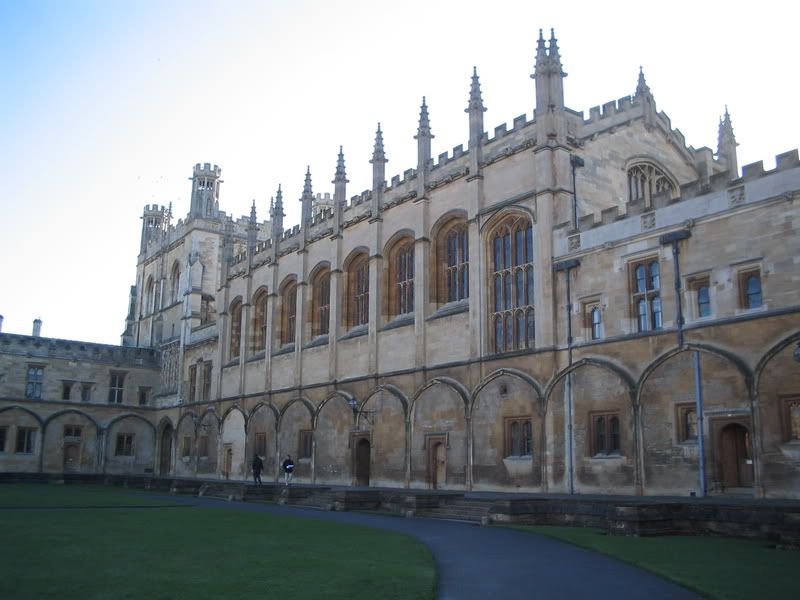
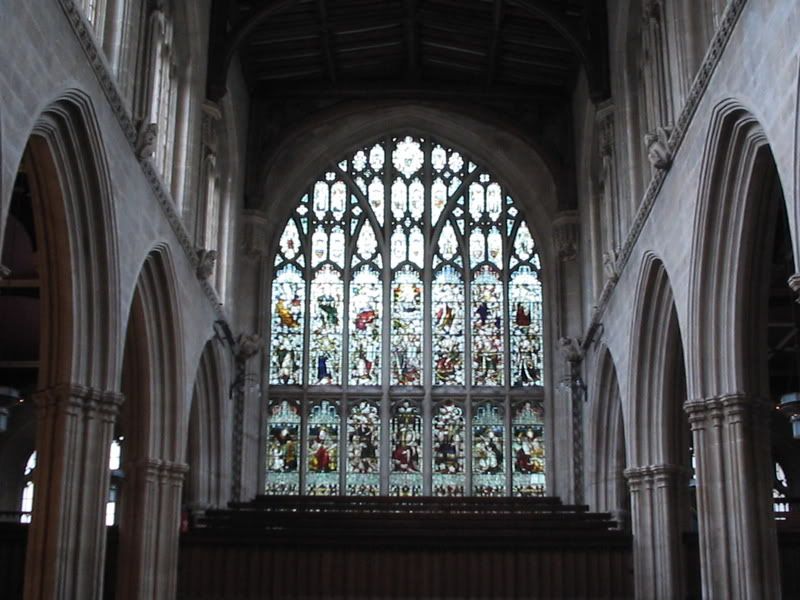
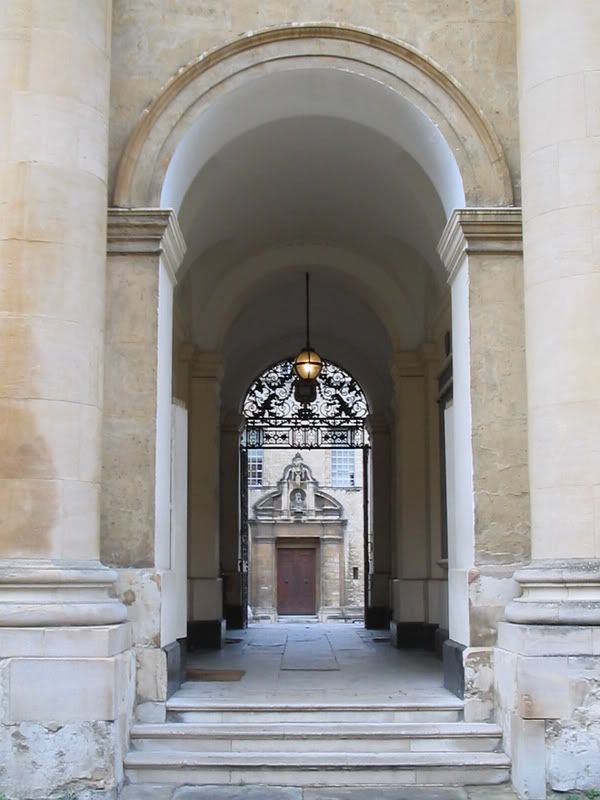
It's hard to get discouraged by even a work load such as this, though, in a city like Oxford. Worcester College, where my tutor's office is, is absolutely exquisite. I'll take pics later.
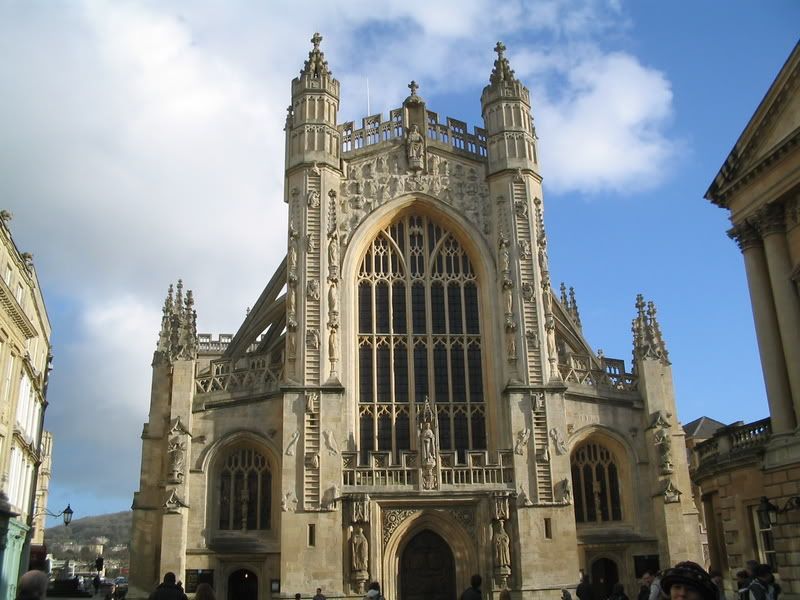
In other news, we had a field trip to Bath on Wednesday. It was most enjoyable. The
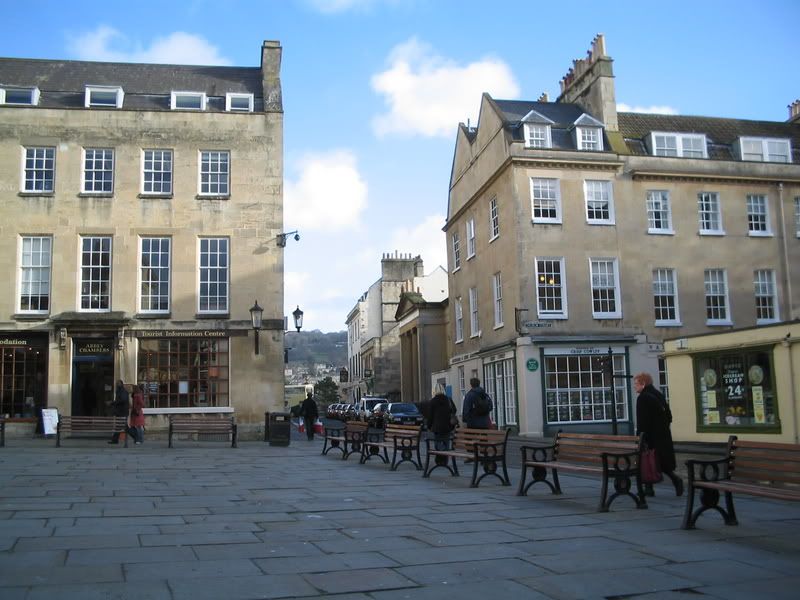
Abbey is unbelievable; go look at the album on my Photobucket account. I failed, unfortunately, to get a picture of the most entertaining guy in the
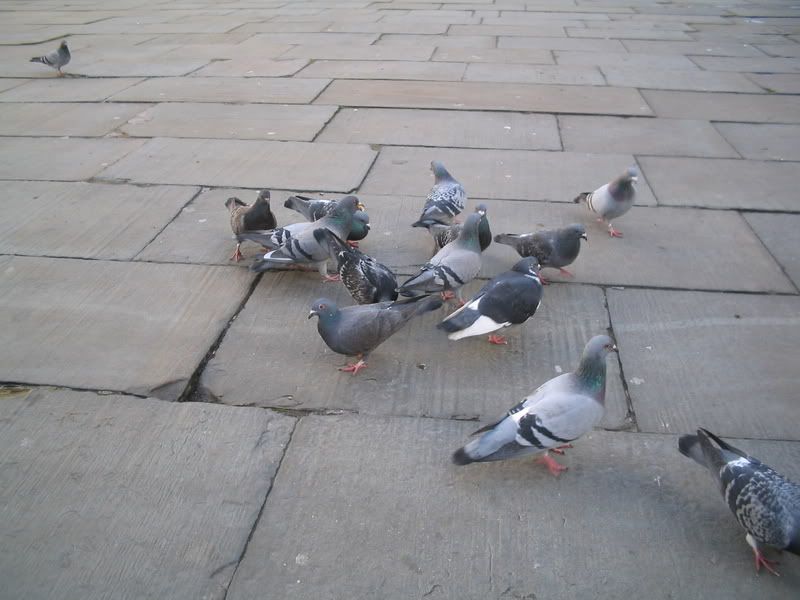
square playing Scottish ballads and Metallica on his guitar. I did get a picture of the hordes of
pigeons, however, which flocked in intimidating numbers when Paul thought it would be a good idea to toss them a piece of pastry. I saw the
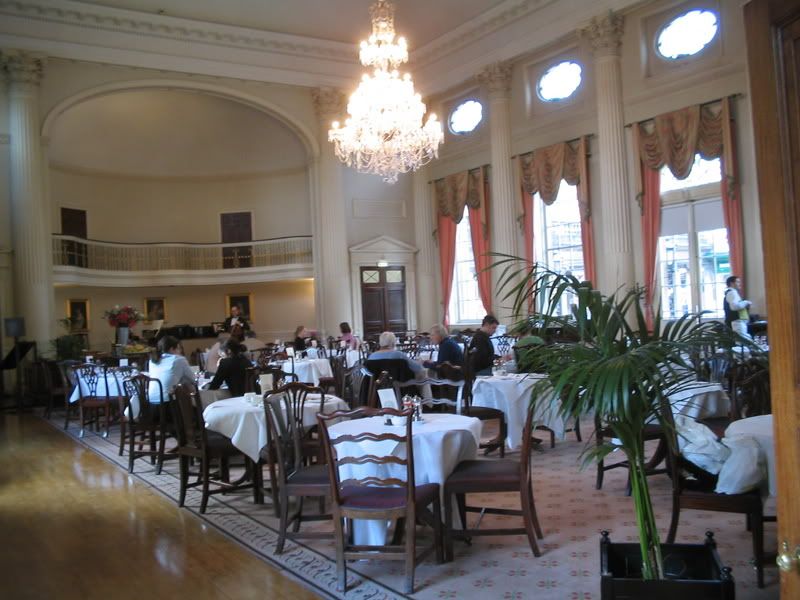
Pump Room and was lost in Austen-induced reverie for a few moments. I'd been vaguely imagining some sort of dim, underground mechanical closet (though that seemed somewhat erroneous to me), but everything made sense when I saw the real thing.
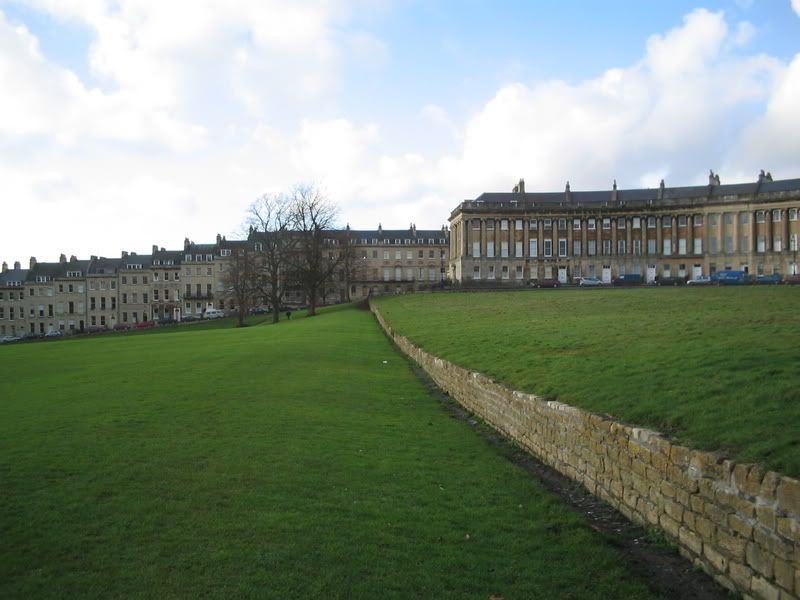
I have to explain the
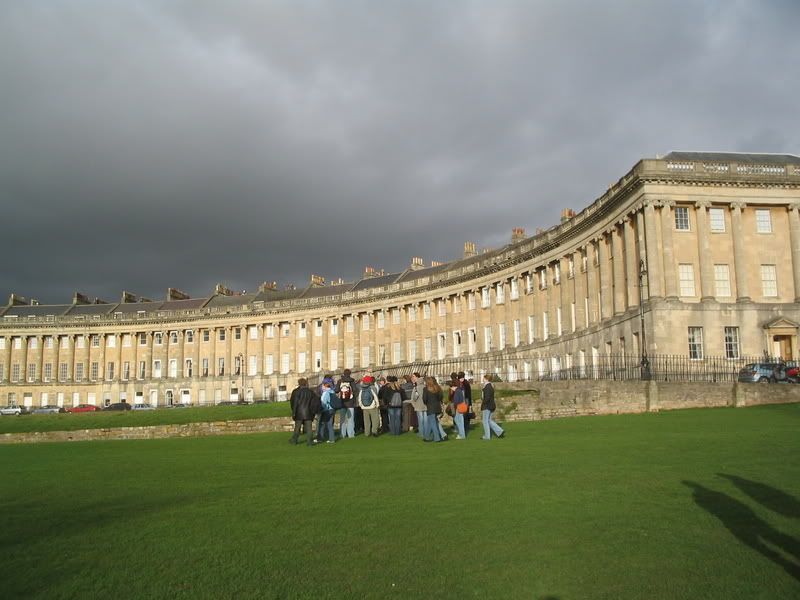
Ha Ha, too: it's a low wall designed to protect the boundaries of the rich people living in the
Royal Crescent (also an unbelievable feat of architecture) from the lowly shepherds and other townsfolk who herded animals on the town common, the field which the Crescent overlooks. The wall is visible from the downhill side, looking up at the Crescent, but from the Crescent itself it's not visible, to preserve an ostentatiously uninterrupted view of the countryside. Thus, when one is walking toward the Ha Ha from the Crescent, admiring said view, one is likely to fail to notice the low wall, fall over it, and produce from any onlookers the phrase from which the wall takes its name.